

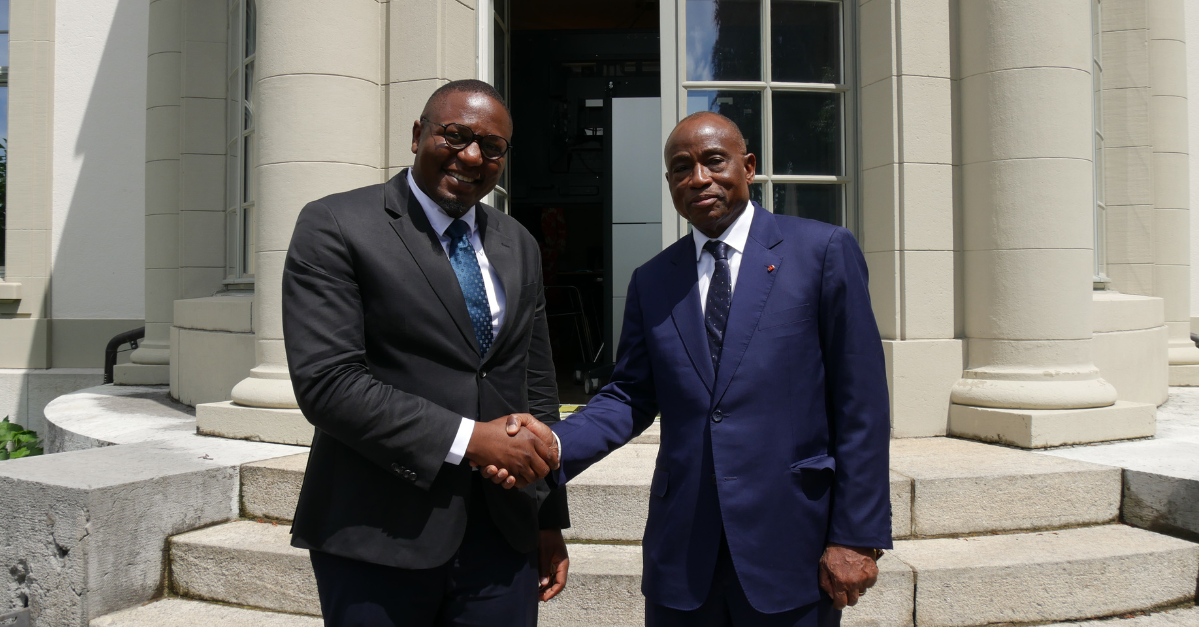
On 5 June, the Jacobs Foundation hosted Dr. Koffi N’Guessan, Côte d’Ivoire’s Minister of National Education, Literacy and Technical Education, at its headquarters in Zürich for a strategic exchange with the partners behind the Child Learning and Education Facility (CLEF).
The visit created an opportunity for industry and philanthropic partners to engage directly with the Minister on Côte d’Ivoire’s education reform priorities, the Government’s vision for foundational learning, and the future trajectory of CLEF.
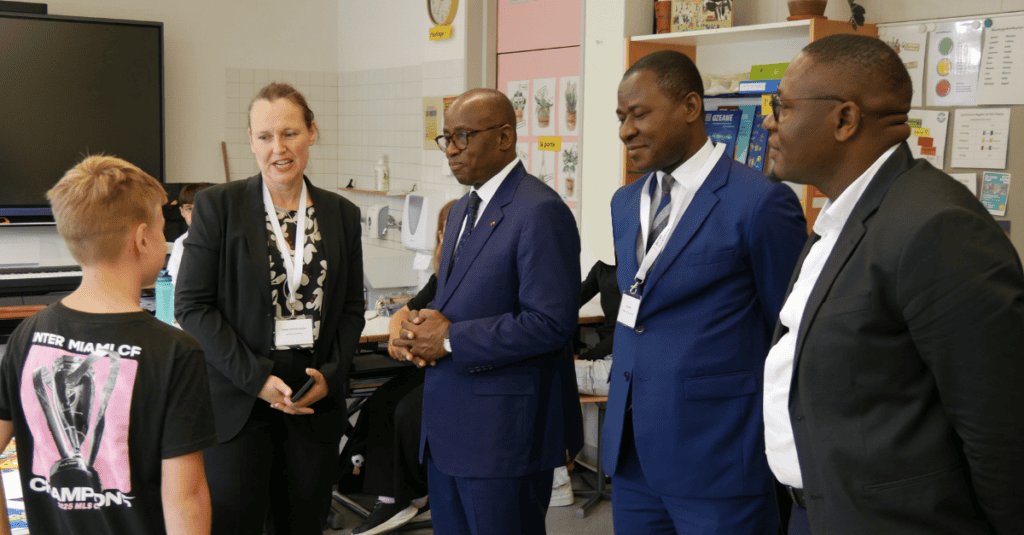
The day began with a visit to a local primary school in Zürich, where Dr. N’Guessan spent time with students and teachers before joining CLEF partners at the Jacobs Haus. The classroom exchange offered a human starting point for the discussions that followed: education reform is shaped in policy and partnership spaces, but it is ultimately experienced by children and teachers.
During the partner exchange, Dr. N’Guessan reaffirmed the Government’s commitment to education reform and to the CLEF partnership. He also spoke candidly about the realities of implementation, reflecting a central theme of the discussion: strong partnerships need space to recognize both progress and challenges if they are to keep improving over time.
CLEF is a coalition led by the Ivorian Government in collaboration with the Jacobs Foundation and other philanthropic foundations, as well as the cocoa and chocolate industry. It supports quality education in Côte d’Ivoire’s cocoa-growing regions by strengthening foundational learning, expanding access to quality education, supporting school infrastructure, engaging parents and communities, and reinforcing education systems.
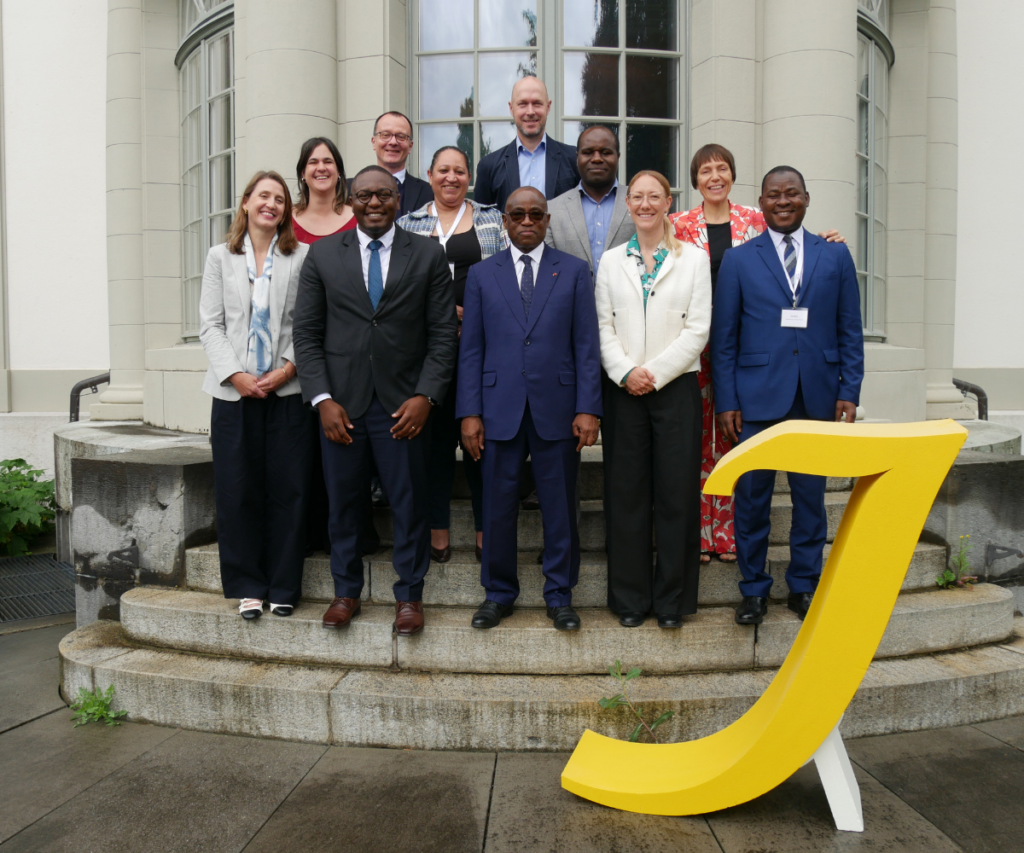
The conversation moved beyond CLEF itself and into Côte d’Ivoire’s wider education reform agenda, including teacher development, school infrastructure, technical and vocational education, and pathways to employment. CLEF was discussed as one contribution to these broader national priorities.
Asked how research can better support government decision-making, Dr. N’Guessan pointed to the importance of evidence that helps diagnose current needs and prepare for the future.

CLEF was created in 2021 in response to the priorities of the Ivorian Government, including the country’s Education Sector Plan and the National Plan to Combat Child Trafficking, Exploitation and Labor. The coalition is now entering a more reflective phase: taking stock of what has been built, what early evidence and implementation experience are showing, and how partners can continue to work together in support of Côte d’Ivoire’s education reform agenda.
For the Jacobs Foundation, the exchange reflected several core elements of its Strategy 2030: convening partners around children’s learning, strengthening the use of evidence in education, and supporting approaches that can adapt as systems learn from implementation.
The visit marked a moment of continuity and renewed engagement. It was not a technical review or a negotiation, but a relationship-building exchange at an important point for CLEF and for Côte d’Ivoire’s wider education reform agenda. Durable reform depends on government leadership, committed partners, and the relationships that make constructive collaboration possible over time.